
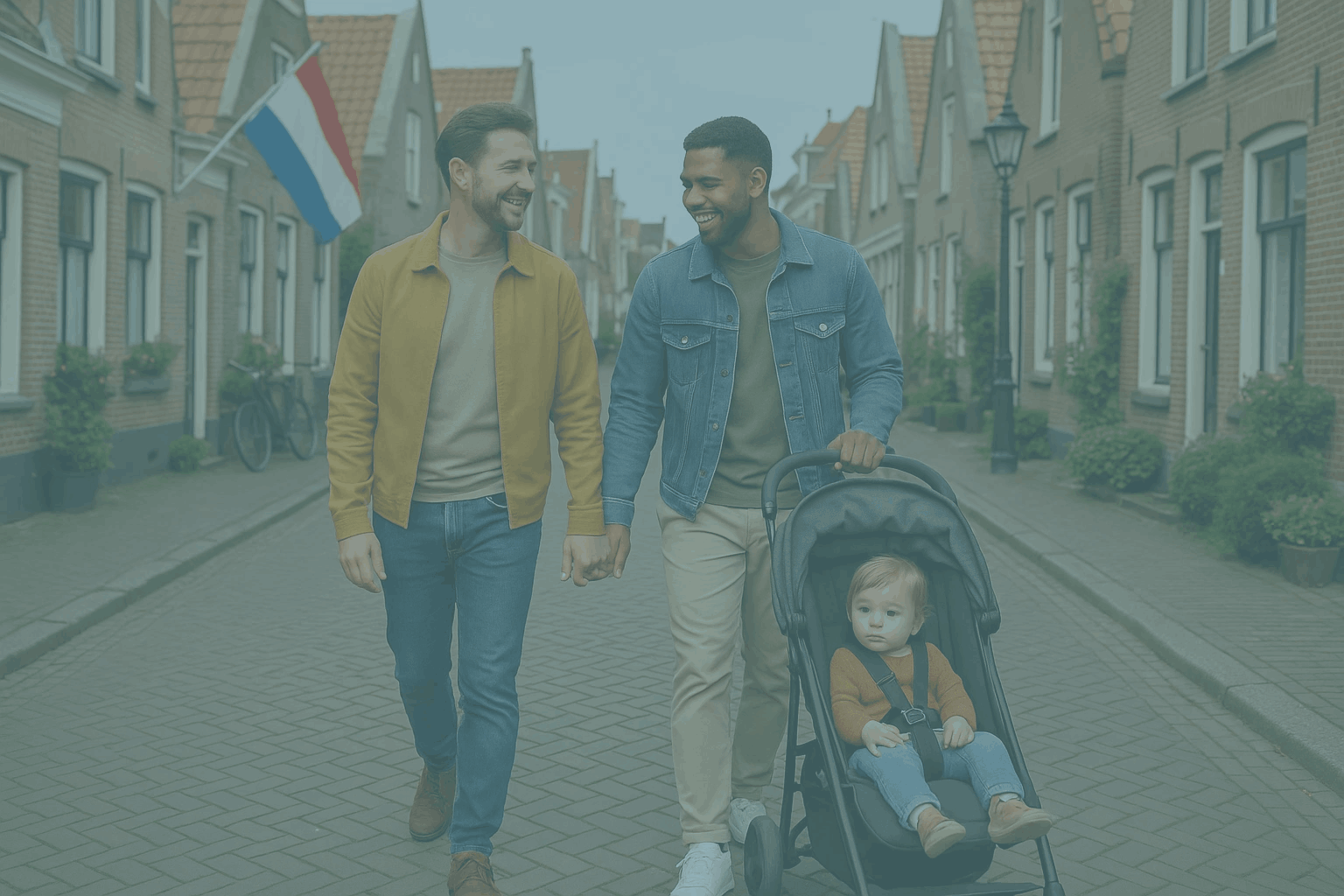
The Netherlands is one of Europe’s most progressive nations on LGBTQ+ rights — yet its surrogacy laws, both international and domestic, remain cautious and restrictive.
For gay men dreaming of becoming fathers, international surrogacy often remains the most practical and legally secure option.
At Global Surrogacy Advisors, we help Dutch couples and singles navigate this evolving landscape, comparing global programmes that align with Dutch legal recognition and ethical standards.
Surrogacy Law in the Netherlands
Under Article 151b of the Dutch Penal Code, commercial surrogacy is illegal, and intermediaries cannot advertise or arrange paid surrogacy domestically. Only altruistic surrogacy — where no financial compensation beyond medical costs is provided — is permitted.
Key points as of 2026:
- Intended parents must find their own surrogate (no agency mediation allowed).
- Surrogates retain legal maternity until a post-birth transfer of custody is approved.
- Same-sex couples are not excluded but face the same bureaucratic process.
- International surrogacy remains unregulated but not criminal for Dutch citizens.
(Source: Government of the Netherlands – Family Law and Surrogacy)
Proposed Reform
In 2024 the State Commission on Parenthood recommended establishing a national framework for regulated surrogacy agreements with pre-birth court approval.
The Ministry of Justice is drafting the Wet Draagmoederschap (Surrogacy Act) expected around 2026–27.
Until that passes, most Dutch gay couples continue to pursue surrogacy abroad.
(Reference: Dutch News – Cabinet Plans Surrogacy Law Reform)
Where Dutch Gay Men Go for Surrogacy
- USA: Widely chosen for legal security; both fathers named on birth certificate.
- Canada: Altruistic, legally safe, socially inclusive.
- Colombia: Rapidly growing option for Dutch LGBTQ+ families; affordable with strong legal backing.
- Mexico: Legal in several states; Spanish- and English-speaking clinics ease communication.
Each destination recognises same-sex intended parents equally, something Dutch law does not yet guarantee pre-birth.
Citizenship and Parentage After Birth
Children born abroad to at least one Dutch biological parent are eligible for Dutch citizenship by descent.
After returning home, parents must apply for:
- Registration in the BRP (Basisregistratie Personen)
- Recognition of foreign birth certificate
- Parental responsibility transfer (if not automatic)
(Source: Immigration and Naturalisation Service (IND))
Practical Guidance for Dutch Intended Parents
- Start with legal consultation in both jurisdictions.
- Verify the clinic’s documentation standards for Dutch authorities.
- Plan for embassy timing — Dutch embassies often take 4–6 weeks to issue passports.
- Budget realistically (US €120 k+, Colombia €55 k+, Mexico €45 k+).
- Work only with ethical programmes that offer surrogate counselling and independent legal advice.
How Global Surrogacy Advisors Supports Dutch Families
We coordinate with Dutch and international lawyers, review contracts, and provide a transparent cost analysis.
Because we remain independent — no commissions or agency ties — our recommendations always reflect what’s genuinely best for you.
We’ve guided clients from Amsterdam, Rotterdam, and Utrecht through surrogacy journeys abroad, ensuring smooth recognition and travel back home.
Book a free consultation to explore the most inclusive, legally secure options for your family.
👉 Book your free consultation with Global Surrogacy Advisors