
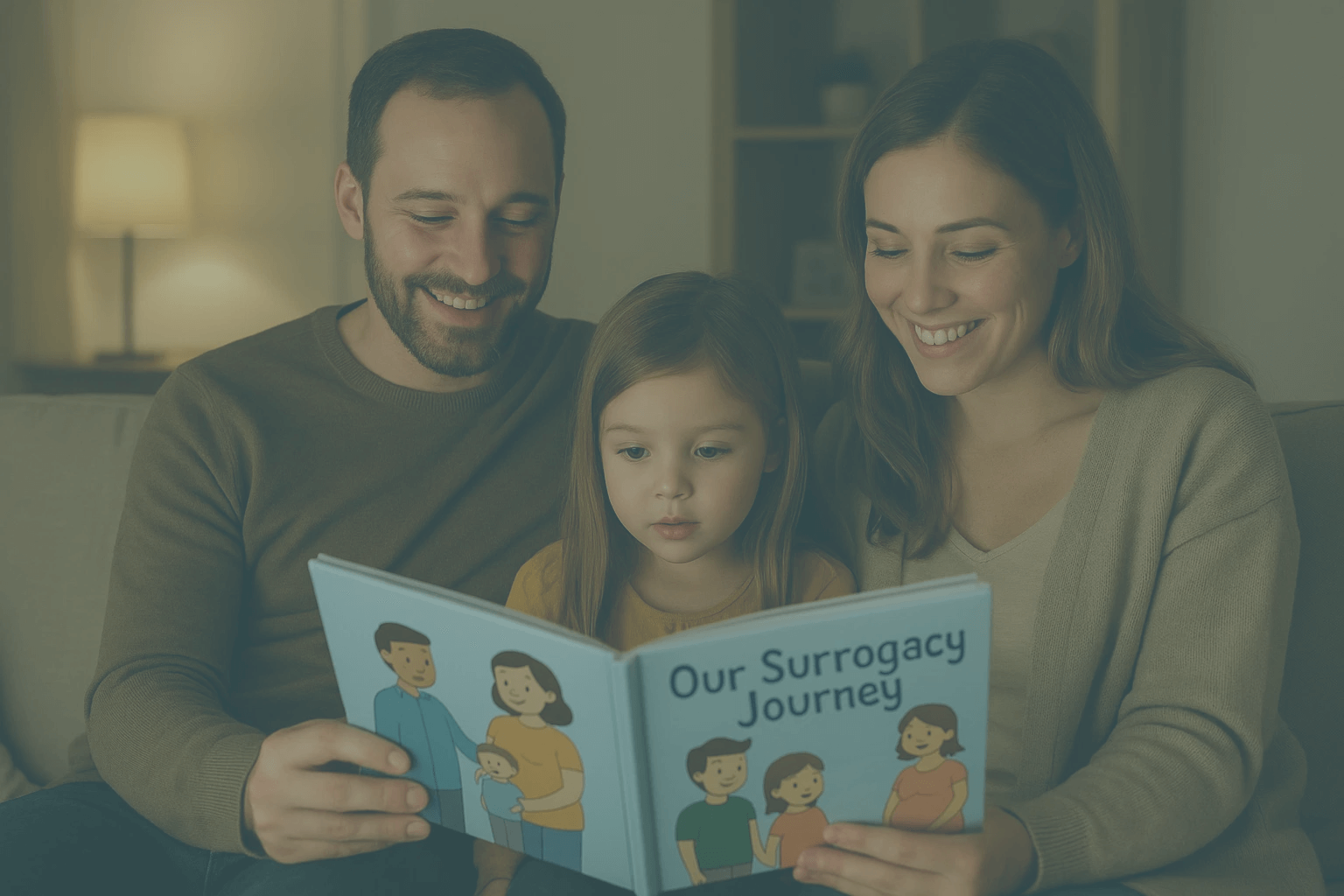
Surrogacy is often surrounded by emotion, ethics, and curiosity — especially about the long-term wellbeing of the children born through it.
A common question I hear from intended parents is simple but heartfelt: “Will our child feel different because they were born through surrogacy?”
After decades of studies and real-world experience, the answer is reassuring: there is no evidence that surrogacy harms a child’s emotional or psychological development.
What the Research Shows
The longest and most respected data come from the Centre for Family Research at the University of Cambridge, led by Professor Susan Golombok.
Their 20-year longitudinal studies compared children born through surrogacy, donor conception, and natural conception.
Findings published in Developmental Psychology (2023) showed that:
- Surrogacy children display the same levels of emotional adjustment as their peers.
- Early disclosure (“We told you how you were born when you were little”) is linked to better family relationships.
- What matters most is love and openness, not the method of conception.
(Reference: American Psychological Association – Long-Term Outcomes of Surrogacy Families)
Physical Health Outcomes
Medically, babies born through surrogacy have health outcomes comparable to those conceived via standard IVF.
According to the European Society of Human Reproduction and Embryology (ESHRE), gestational surrogacy does not increase genetic or developmental risk when standard prenatal screening and obstetric care are used.
(Reference: ESHRE Guidelines on Surrogacy 2022)
Emotional Identity and Belonging
Some parents worry about future questions like “Who carried me?” or “Do I have another mother?”
Research suggests that children do not experience identity confusion if parents handle these conversations with honesty and positivity.
The same Cambridge team found that surrogacy-born children who learned their story before age 7 described feeling “special” or “chosen,” not confused.
The key is timing and tone — make surrogacy part of family storytelling from early childhood.
The Role of the Surrogate
In ethical arrangements, surrogates understand their role clearly: they are helping another family bring a child into the world, not giving up “their” baby.
When boundaries and support systems are strong, the transition is smooth for both parties.
Open communication and legal clarity at the start prevent later misunderstanding and reinforce stability for the child.
Guidance for Intended Parents
- Tell early, tell simply. Use children’s books about surrogacy to normalise the story.
- Answer questions honestly. Emphasise intention, gratitude, and love.
- Stay connected with your surrogate (if all parties agree). Periodic updates or photos can later enrich your child’s understanding of their origins.
- Seek community. Support networks such as Families Through Surrogacy offer reassurance and advice.
Final Word
Children born through surrogacy grow up just as emotionally secure as any other — because what defines a family is not biology, but belonging.
When surrogacy is handled ethically, transparently, and with love, it gives a child not one story of care, but two: one from those who brought them into the world, and one from those who raised them in it.
👉 Book your free consultation with Global Surrogacy Advisors